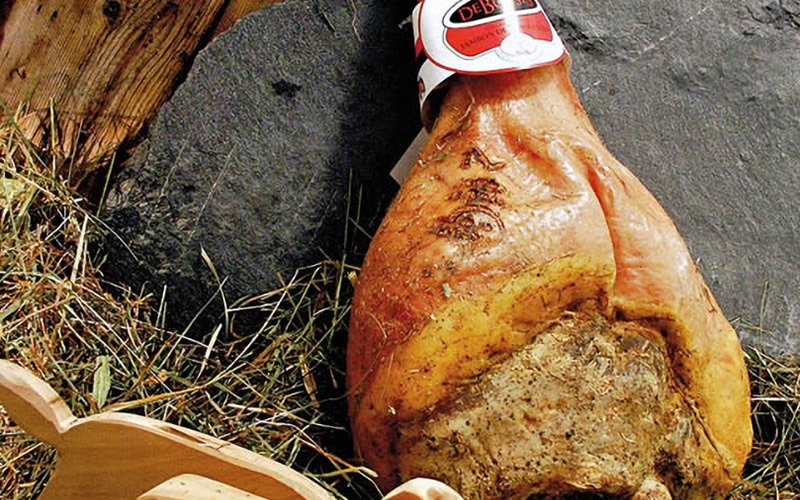
D.O.P. raw ham matured at 1600m above sea level.
Vallée d'Aoste Jambon de Bosses PDO is much more than a raw ham. It is the refined expression of a culture, the flavor of an ancient tradition, the value of a small but important corner of the Aosta Valley.
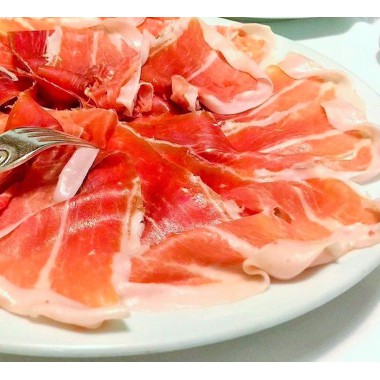
Jambon de Bosses DOP - raw national pork leg ham, salted with a preparation based on sea salt and certified Aosta Valley herbs. Compact shape, dark red colour, aromatic and fragrant flavour, slightly salty and with a sweet aftertaste.
THE ORIGINS OF JAMBON DE BOSSES
Jambon de Bosses is a very particular raw ham produced in the small village of Saint-Rhémy-en-Bosses, which has less than 400 resident inhabitants and is located near the border with Switzerland in the upper Gran San Bernardo Valley.
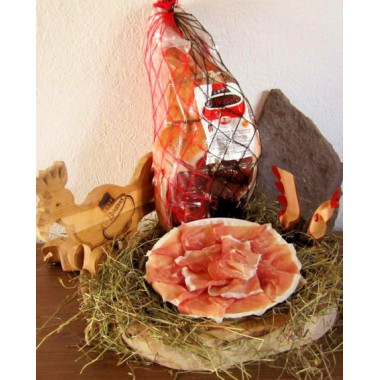
It is advisable to store whole Vallée d'Aoste Jambon de Bosses PDO hams in cool environments and, once started, to grease the cut surface with a drizzle of oil and cover it with transparent film. Vallée d'Aoste Jambon de Bosses PDO is best expressed when cut into very thin slices (preferably by hand) and served with traditional rye "black bread". The combination of this ham with mountain butter, honey and walnuts is also excellent.
THE PRODUCTION OF JAMBON DE BOSSES
Only the best pork legs are used for the production of Jambon de Bosses. The pigs come from farms located not only in the Aosta Valley, but also in Piedmont, Lombardy, Emilia Romagna and Veneto.
Following slaughter, the legs are trimmed with sharp knives in order to remove excess fat and rind, and then undergo the salting treatment.
The dry salting of the meat is one of the most delicate steps in the production of Jambon de Bosses. This period has a total duration of approximately 15-18 days, and sees the use of a very particular mixture prepared with crystalline salt, sage, rosemary, minced garlic, coarsely ground black pepper and aromatic berries typical of the production area. In the preparation of this mixture, the use of any coloring or preservative of artificial origin, including potassium nitrate, is prohibited. During salting, the legs are stored in cold environments and divided at least twice starting from the stem up to the head of the femur in order to facilitate the elimination of any serous or blood residues.
Once salting is complete, the legs are carefully washed to remove residues of the mixture, carefully dried and finally hung. The actual maturing then begins, which lasts for a minimum of 12 months and which takes place in cool environments, protected from light and optimally ventilated. Once drying has begun, the meat of the exposed thigh and the head of the femur are covered with abundant pepper, ground rather coarsely, in order to avoid oxidation and deterioration.
THE CHARACTERISTICS OF JAMBON DE BOSSES PDO
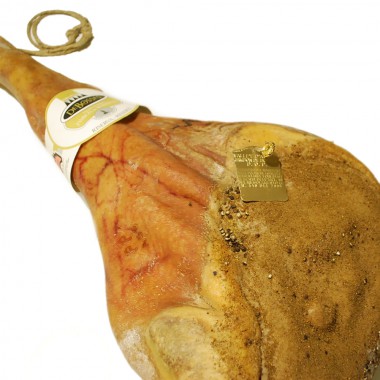
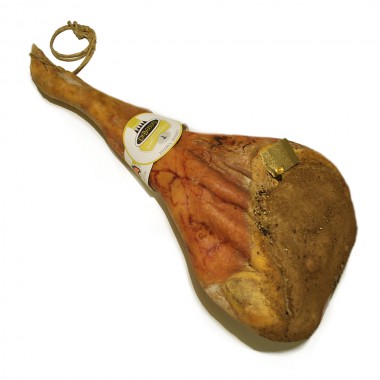
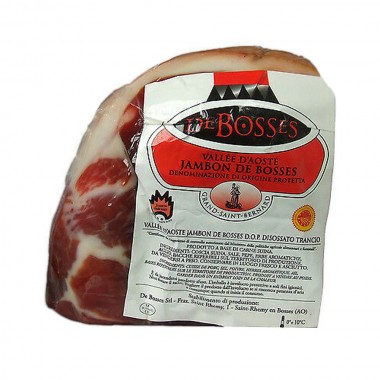
At the end of the minimum maturation period, the Jambon de Bosses presents itself with a characteristic semi-pressed shape; in the upper area of the shank there is a hole through which the rope used to hang the ham passes. The minimum weight of the Jambon is 7.5 kilograms.
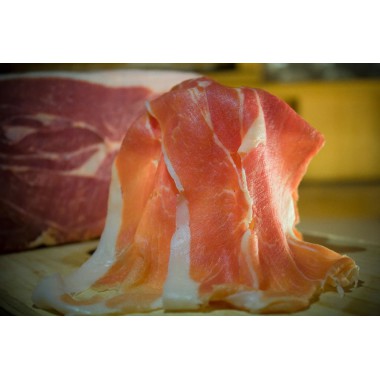
When cut, the slice of Jambon de Bosses has a firm, elastic and compact consistency. The color of the lean meats is dark red, and contrasts clearly with the bright white, sometimes tinged with pink towards the outside, of the fatty parts. The scent is delicate, aromatic and overall typical of seasoned meats.
The flavor is savory and slightly salty, but with a pleasant hint of sweetness; in particular, the aromatic components are enhanced in the fat, while the lean meat has a delicate flavor and a very delicate hint of game.
To recognize Jambon de Bosses you need to look for the following indications on the leg or label:
-The designation in Italian “Valle d’Aosta Jambon de Bosses” or in French “Vallée d’Aoste Jambon de Bosses”.
-The logo of the denomination